In the studio with Pablo Linsambarth
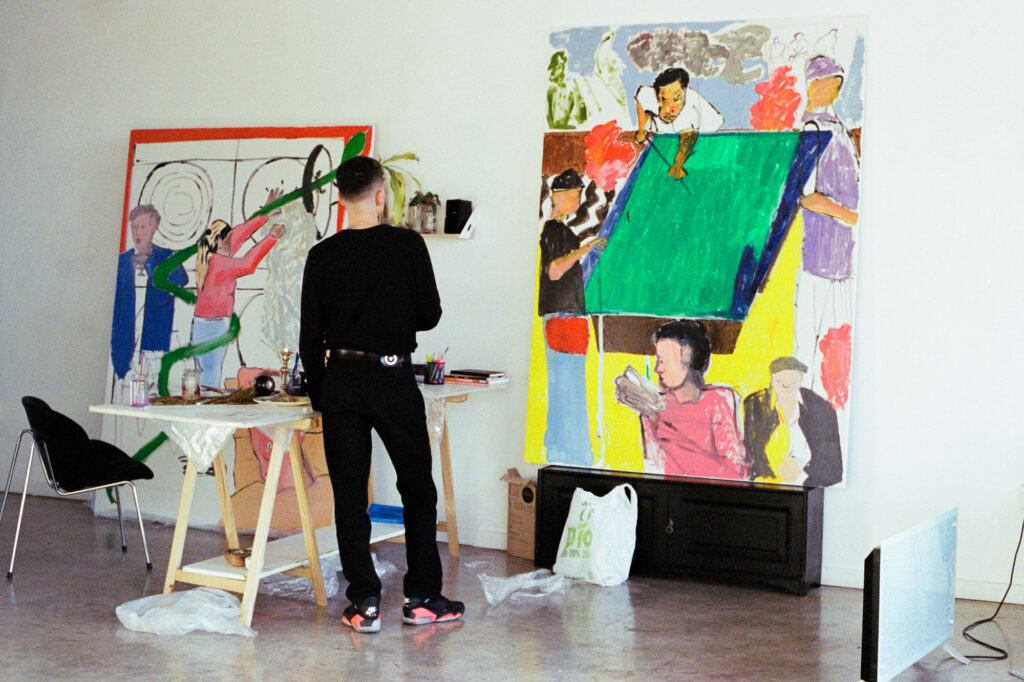
I went to see Pablo Linsambarth on one of those rare bright days Madrid throws at you after weeks of rain, when the light feels almost aggressive and everything looks sharper than it probably is. His studio caught it all, canvases hanging on the wall, others drying flat on the floor, a few half-hidden behind bigger pieces as if they’d just been moved to make space for something else.
There wasn’t a sense of “this one is finished” and “this one is not.” It felt more like everything was in conversation with everything else.
A large square oil hangs beside a painted wooden tray that clearly had another life before this one. Painted scraps of wood sit on the floor without much fuss. Linen, wood, scraps, whatever he has to hand. He doesn’t treat the surface as sacred. It’s part of the process.
What struck me first wasn’t the subject matter but the heat of it all. The oranges feel warm without trying to be. The blues don’t cool them down so much as steady them. There are volcanoes that appear more than once, and candles too, small flames that you almost miss at first. Nothing feels overly symbolic. They just keep returning.
And then there are the footballers.
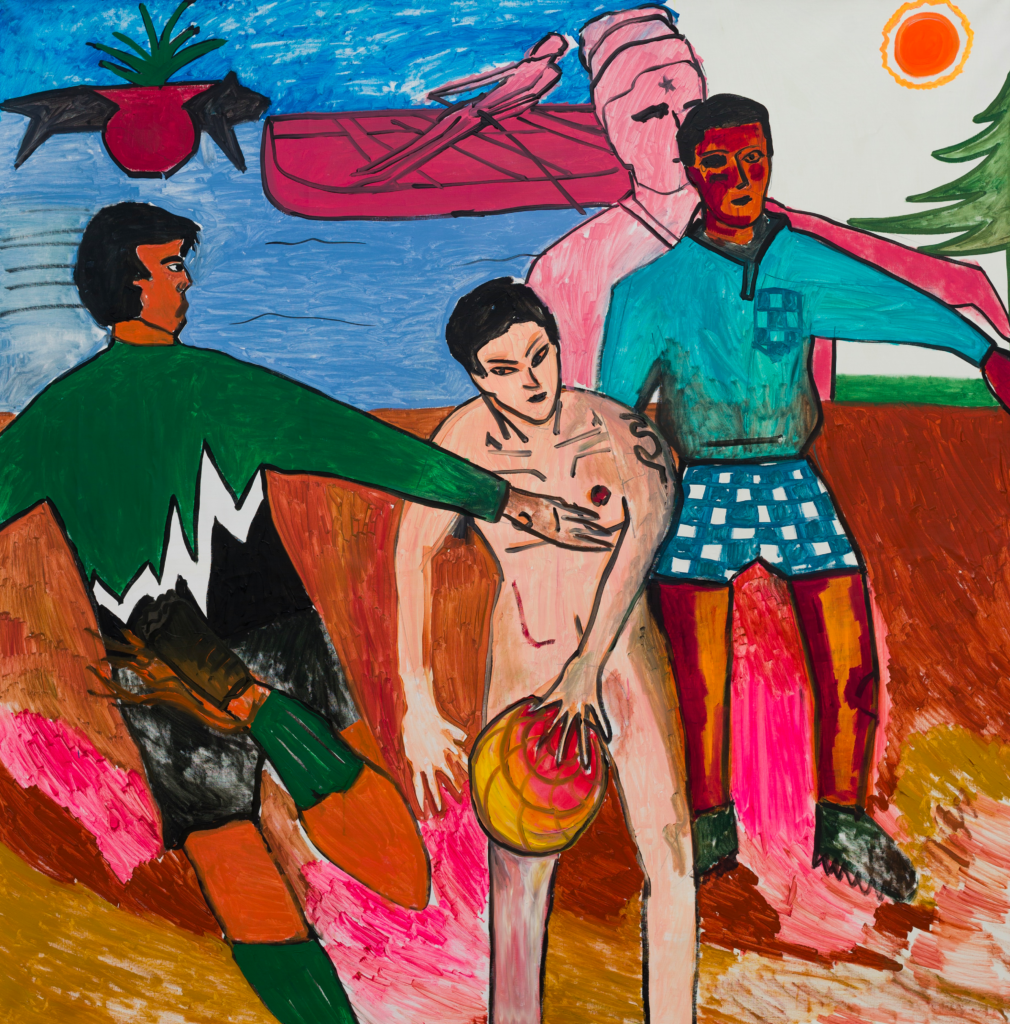
Two players caught mid-movement sit between landscapes and more obscure scenes, and I instinctively read them as separate, as if they belonged to a different genre. Pablo gently pushed back on that. Football, he said, isn’t a side note. It’s a global language. It plays out everywhere , on improvised pitches, in public parks, in stadiums that feel like they’re holding the emotional temperature of entire cities. It’s anticipation and release and collective breath. When you look at it that way, it sits perfectly alongside the rest of his works.
He talks about painting as language, which sounds abstract until you’re actually standing there. Landscapes are one way of speaking, portraits another. Oceans, interiors, bodies, all slightly different ways of working through something. He started with people he knew, family, professors, friends, which makes sense. There’s something grounding about painting what’s familiar. Over time the figures became less specific, the bodies now aren’t fully defined. You feel like you recognise them, but can’t remember them.
If you spend a bit of time with it, small details start to appear, something tucked into a corner, a shape you hadn’t noticed at first.
A gallery or museum you never miss? ICA Miami – always inspiring, and the fact that it’s free makes it even more special.
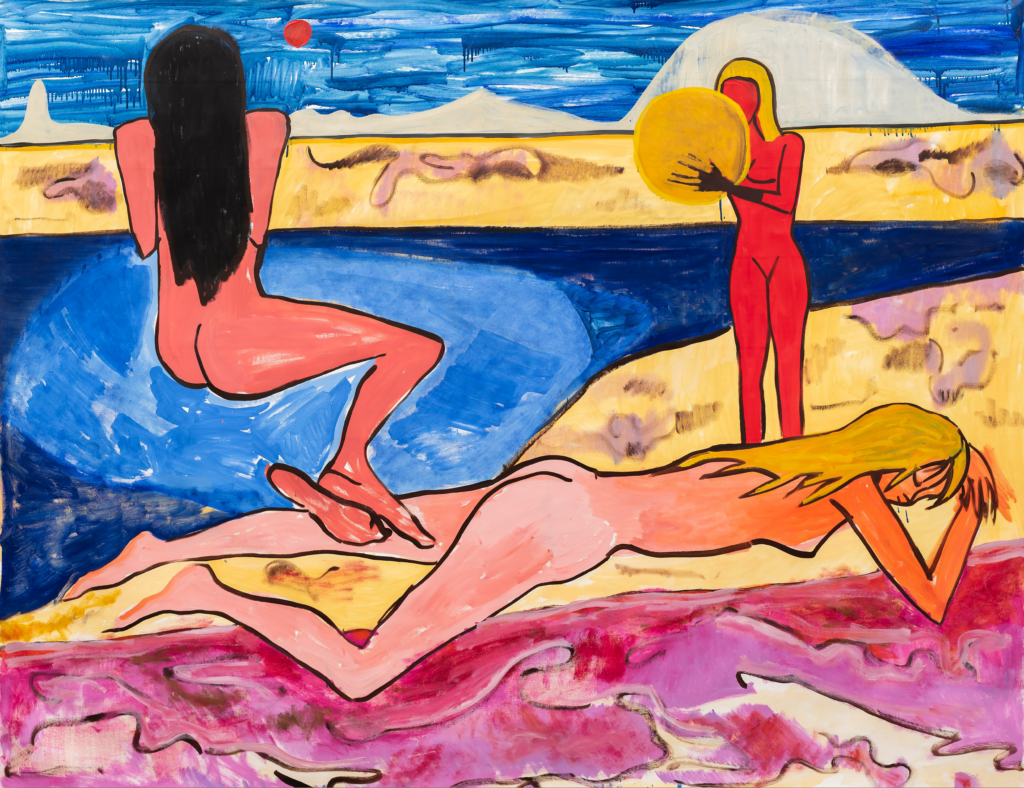
He prefers oils, mainly because of the depth and the time they demand, but he moves between linen, wood and found materials without much ceremony. When I asked if anything in his life had visibly shifted his practice, he mentioned, without having reflected on it before, that after a long-term relationship ended he found himself working on different kinds of canvas. Not dramatically. It just happened.
He grew up in Santiago and had been around art from fairly early on, eventually studying it there as well. There were about 300 students in his year at art school, a number that sounds ambitious now considering only three of them still practise. He knew it wasn’t the most straightforward career choice and did consider architecture for a while, mainly because it felt safer. His father asked him, quite simply, if that would actually make him happier. That was the extent of the drama.
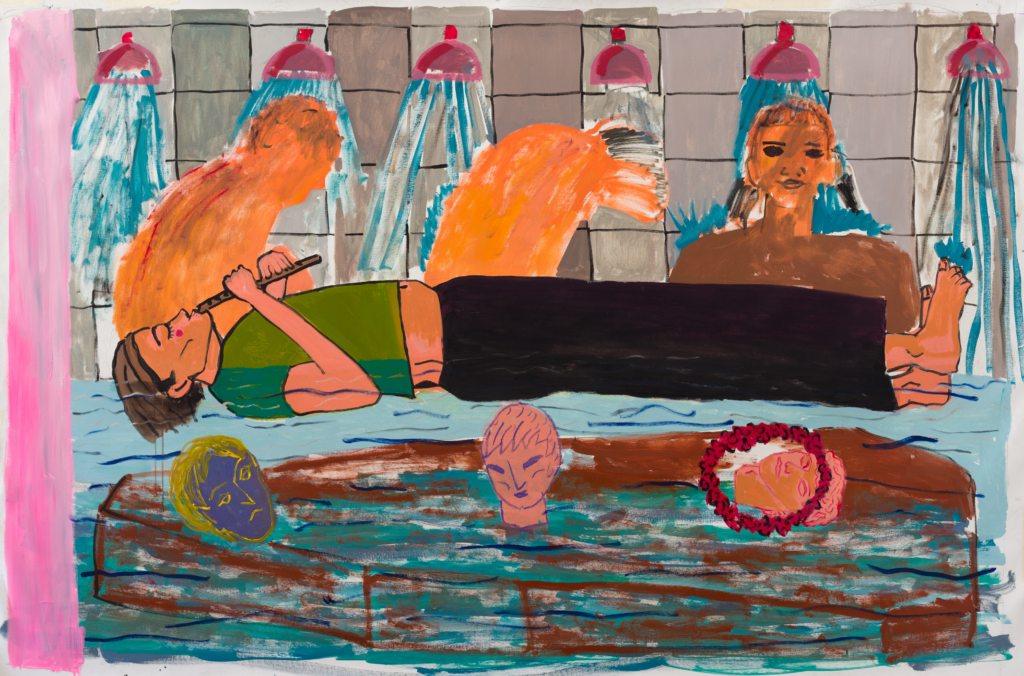
Something that surprised me was how naturally Scandinavia came into the conversation (particularly as a Swede myself). The quiet, the relationship to landscape, the way restraint can hold as much weight as excess. His favourite painter is Karin Mamma Andersson. He mentioned her almost casually. What he likes is the stillness in her work, the way nothing feels rushed. The landscapes don’t try too hard. They just sit there. That restraint is something he’s drawn to.
Hearing him describe it, you can see how that kind of restraint would appeal to him, even if his own palette often leans warmer.
He mentioned that he’s rarely not thinking about painting. It doesn’t really stop when he leaves the studio. He’ll be walking somewhere, or half-awake at night, and a composition will start shifting in his head , colours adjusting, a figure moving slightly to one side. So when he’s back in front of a canvas, he isn’t beginning from scratch.
Being in the studio, with works drying at different speeds and leaning into one another, you get the sense that nothing there is entirely settled. Some paintings feel quiet. Others feel like they’re holding something back. Even the smaller elements, a patch of colour, a barely defined figure, seem to carry weight without demanding attention.
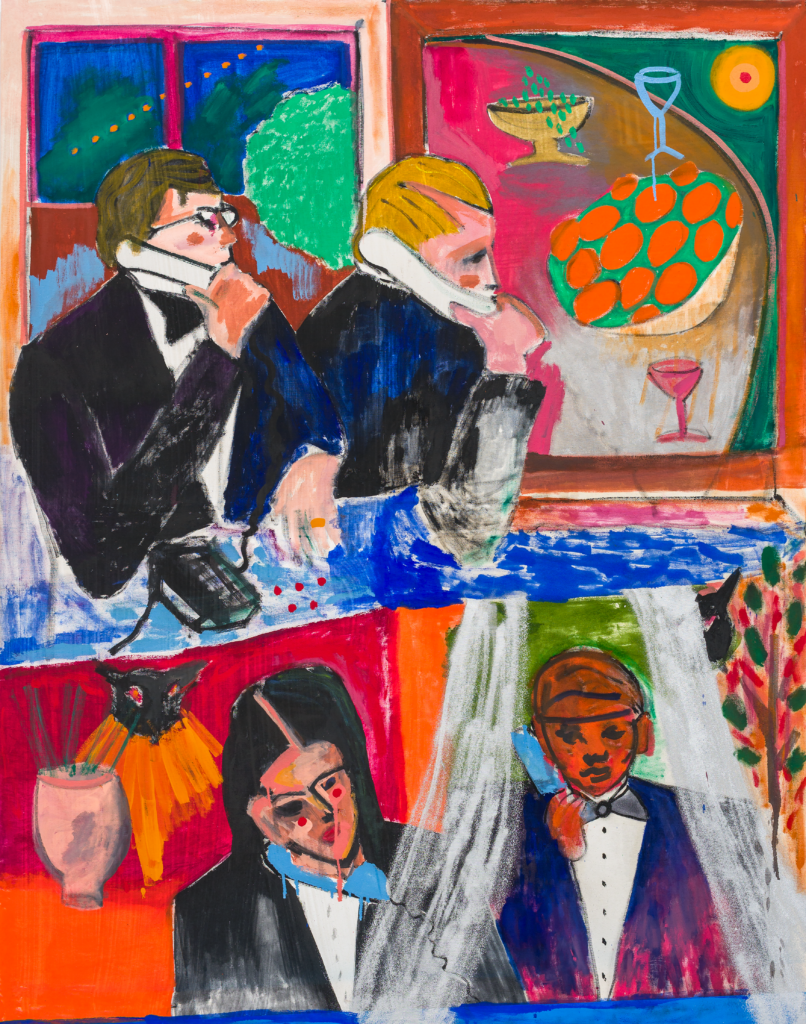
Standing there, surrounded by paintings in various stages of drying, what stayed with me wasn’t one specific motif but the feeling that everything in the room was carrying a certain pressure. Some of it obvious. Some of it barely visible. The volcano, the candle, the footballer, the solitary figure, they don’t compete with each other. They just exist within the same current.
The studio didn’t feel quiet, even when it was.
Words by Kellie Erm