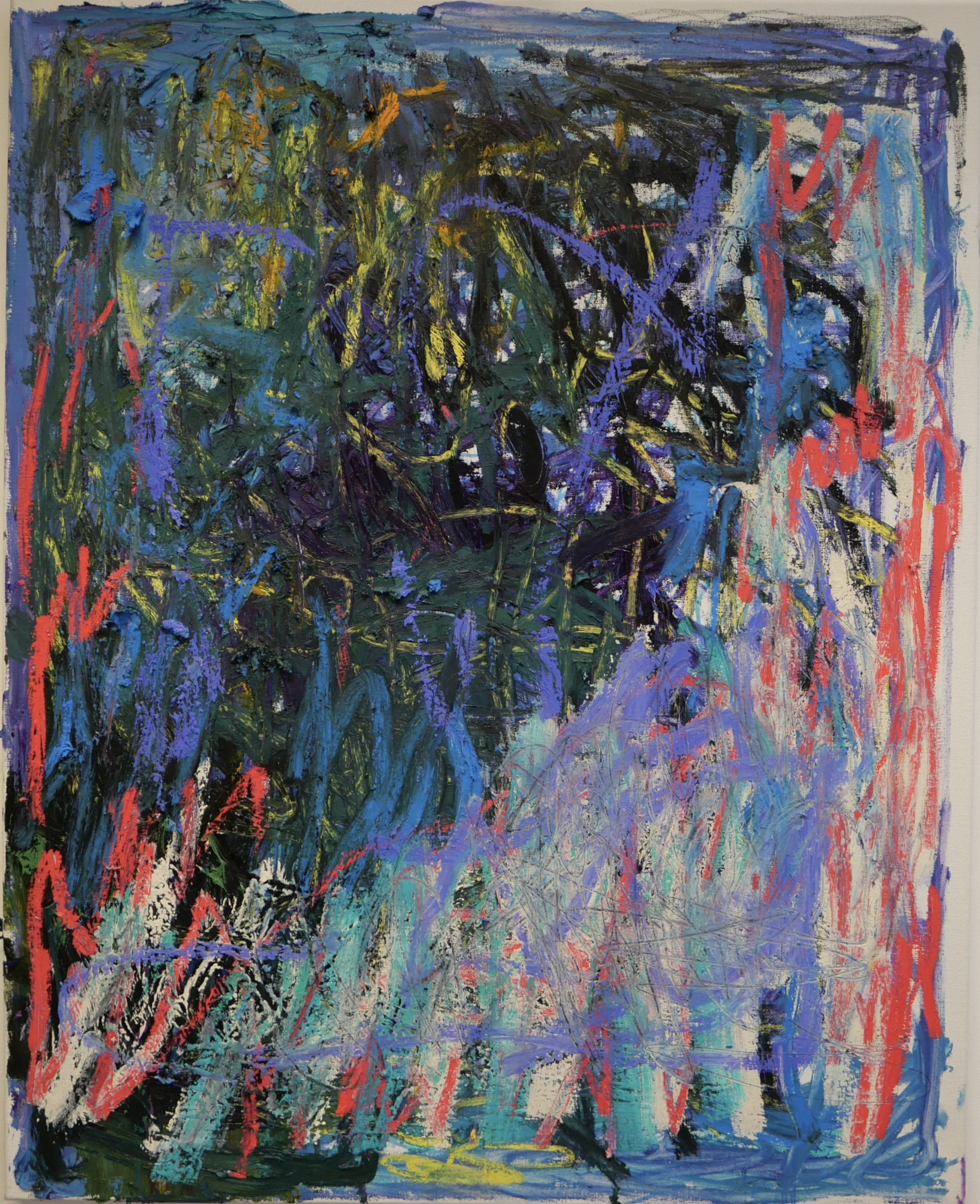
by Cristina Figueroa Vives
Art Curator
In an art world increasingly shaped by visibility strategies, image-making, and the accelerated
pace of the market, Mariana allows herself a rare gesture: to feel. Her work invites us to pause,
breathe, and surrender to emotional experience.
The Colombian-American artist Mariana Córdoba belongs to a generation of Miami-born artists who have expanded their practice beyond the local scene, establishing a presence within international art circuits, particularly in Europe.
A graduate of London’s Royal College of Art, one of the world’s most prestigious postgraduate institutions for art and design, Mariana has developed a deeply personal painting practice that has already been exhibited in cities such as Miami, Buenos Aires, Punta Del Este, Montevideo, Madrid, and Santander.
In an art world increasingly shaped by visibility strategies, image-making, and the accelerated pace of the market, Mariana allows herself a rare gesture: to feel. Her work invites us to pause, breathe, and surrender to emotional experience. At first glance, her paintings evoke processes akin to automatism: graffiti-like marks, doodles, calligraphic inscriptions, scratches, traces, and gestural interventions emerge across the surface, evoking both pain and estrangement. These are deeply personal experiences that nonetheless resonate with the viewer.
Her visual vocabulary incorporates references ranging from Pre-Columbian and Egyptian symbols to spiritual imagery and childhood drawings. Memory, intuition, and repetition converge within a practice in which the repeated gesture functions as a form of meditation and self-discovery.
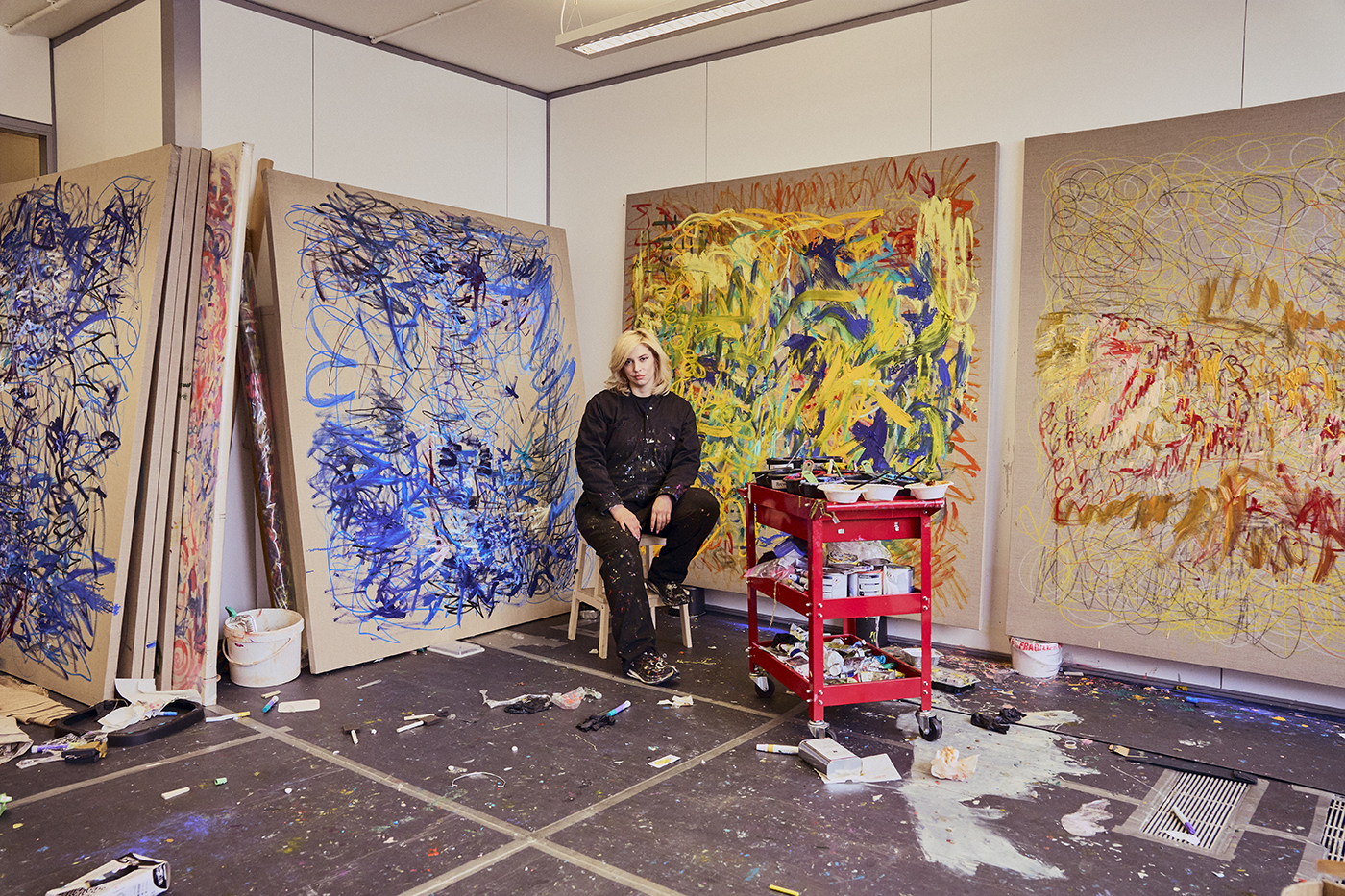
Technically, Córdoba works with oil, enamel, graphite, and paint markers on canvas and raw linen. One of the most distinctive elements of her practice is the use of burlap, a coarse fabric made from plant fibers such as jute or sisal and traditionally associated with agricultural sacks. By incorporating this material as the canvas to her paintings, the artist establishes a subtle connection to her Colombian heritage and to the coffee-growing culture that forms part of the country’s material memory.
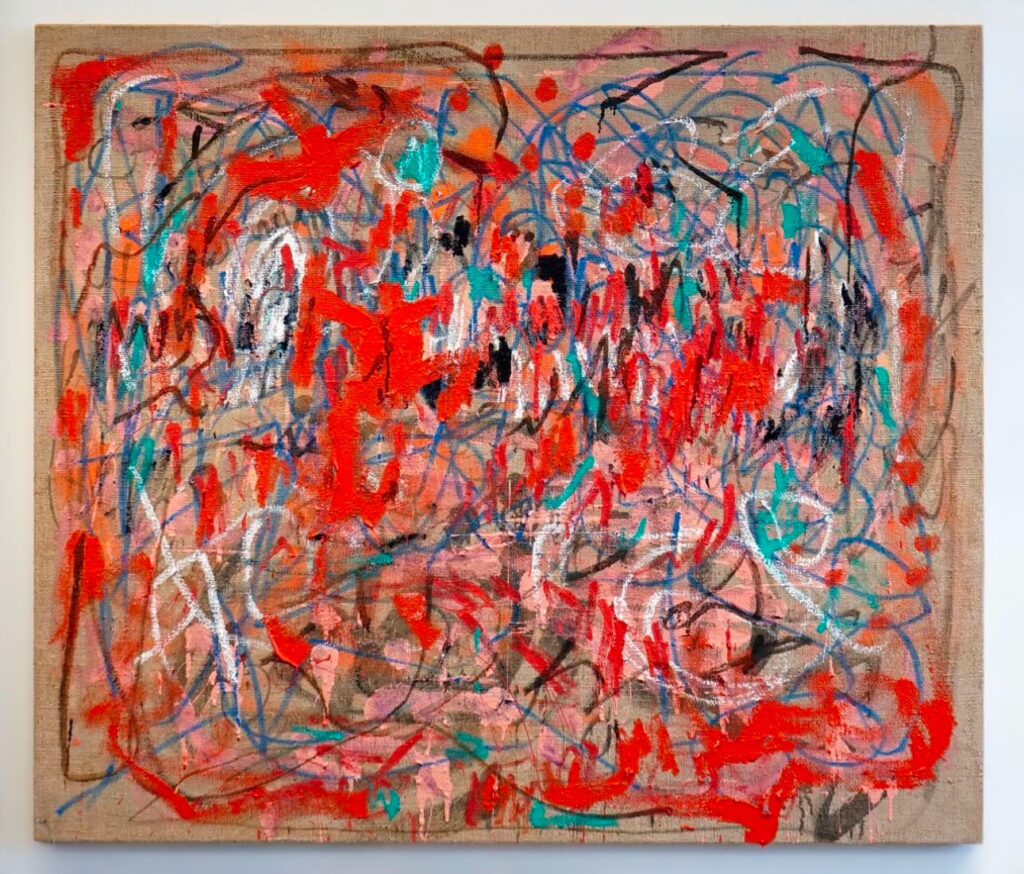
Another essential aspect of Córdoba’s work is color. Dense with texture and charged with energy, her paintings unfold through chromatic gradations that oscillate between explosive intensity and moments of restraint. Her palette shifts according to the geography in which she is working and the emotional state she inhabits, yet color remains a constant vehicle of expression and an indispensable presence within the composition.
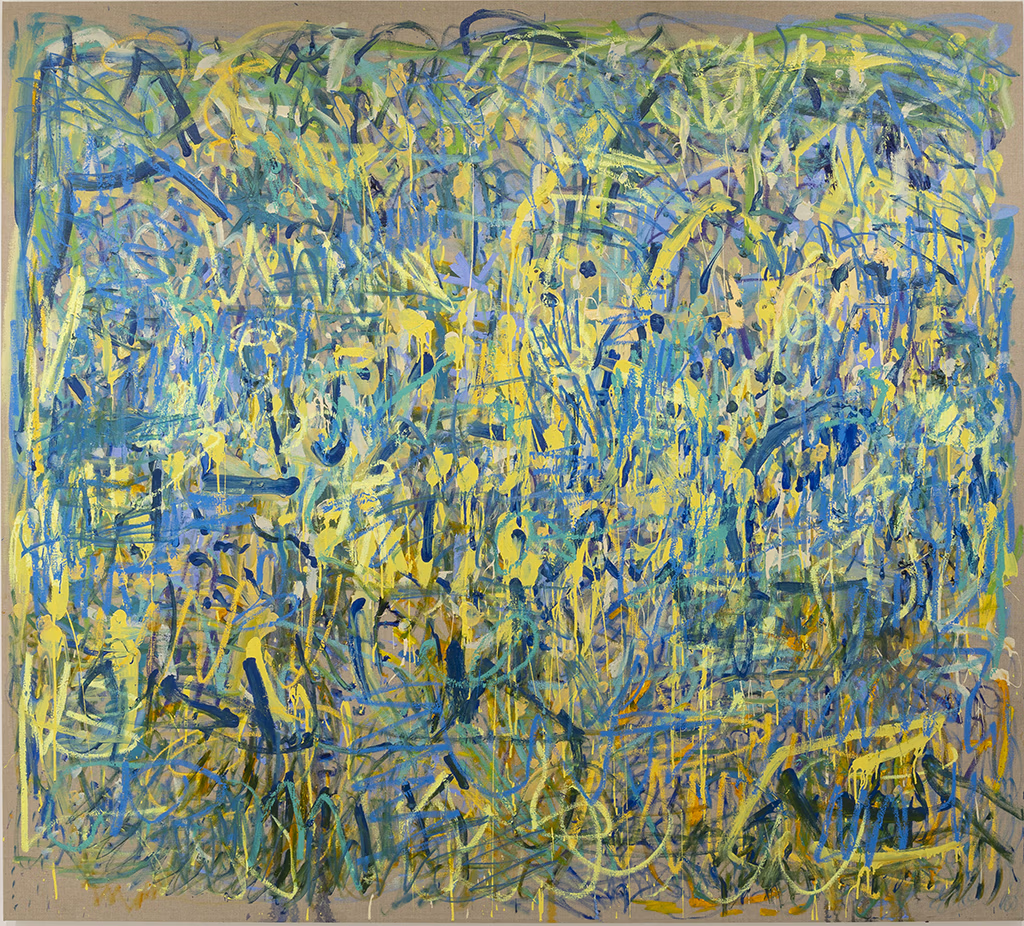
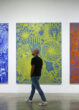
In As So It Goes (2024), vivid reds erupt across the canvas, generating a palpable tension that animates the surface. Layers of gestural marks, drips, and looping lines collide in a composition that feels restless and emotionally charged, as though the painting were recording the intensity of an inner state in real time. By contrast, Just Let Yourself Feel (2025) is dominated by luminous yellows, greens, and blues that evoke a more contemplative atmosphere. Here, the dense network of marks coalesces into what appears to be an abstract inner landscape. The painting unfolds as a meditative field in which color becomes a space for reflection, inviting the viewer into a quieter and more introspective experience.
Her canvases function as walls of lamentation or non-linear visual diaries. Across their surfaces, the artist accumulates codes, lines, repetitions, symbols, and an intense gestural language. Her process is both physical and performative: Córdoba frequently rotates the canvas to observe it from multiple perspectives and often begins her compositions at the bottom edge, gradually working her way upward. Every mark emerges from a continuous negotiation between intuition and control.
When I first encountered her work at Galería La Cometa in Miami, one of my immediate impressions was the visceral force of her paintings. There is a raw, almost guttural energy within them that seems to arise from the need to transfer emotion directly onto the surface without apparent filters. Yet this sense of spontaneity is deceptive. While intuition occupies a central place in her practice, nothing in her compositions is truly arbitrary. Mariana carefully calibrates each gesture, engages in dialogue with the canvas, interprets its possibilities, and responds to them. Painting thus becomes a constant conversation between control and surrender.
Ultimately, all the elements that define her visual language—materiality, color, symbolism, repetition, and gesture—converge toward a single objective: allowing the viewer to surrender to the experience of feeling.
You may also like
Curator’s Notebook from Venice: Art, Politics, and the Enduring Power of Presence
Venice has always been a city suspended between beauty and uncertainty. This year, however, uncertai
The hyperlocals are promised tomorrow
I have my share of grievances and criticisms about this Art Basel season,as do many Miami natives in
Layered Codes: The Material Language of Loriel Beltrán
For Loriel Beltrán, painting is as much a constructed object as it is an image—a built form whose
Post a comment